Strategic Vendor Management: The Time to Regain Control of Costs is Now
Back to All Insights
COGS as a Strategic Lever in a Changing Market
In today’s volatile operating environment, cost of goods sold (COGS) is no longer a static variable – it is a strategic lever. In the last few years, persistent inflation, supply chain fragmentation, geopolitical uncertainty, and shifting demand patterns have fundamentally altered the balance of power between buyers and suppliers.
Against this backdrop, retailers that proactively reset vendor economics—through direct vendor negotiations and marketwide RFPs—are creating meaningful margin resilience while enhancing funding for long-term competitiveness.
Delaying action risks locking in structurally higher costs, eroding margins, and falling behind competitors who are actively resetting vendor economics to strengthen their cost position.
Market Dynamics and Structural Considerations Demands an Immediate COGS Readjustment
Recent macroeconomic, consumer, and industry dynamics have materially altered cost structures across the value chain, prompting companies to reassess whether their COGS position is still competitive:
- Consumers are increasingly value-oriented. Our latest consumer sentiment report indicates that among grocery shoppers considering a reduction in spend, 49%1 plan to switch to lower-priced brands within their current store, while 33%2 of all grocery consumers report purchasing private label products more frequently, elevating the importance of sourcing discipline and COGS resilience.
- Scale-driven competitors such as Costco and Walmart continue to set the cost and price benchmark. For example: according to our latest price checks, across a basket of comparable national brand items, Walmart’s price is 5%3 lower than major competitors’. This puts pressure on margins across the market and requires other players to operate with greater cost discipline and organizational agility.
- Cost competition has reignited across suppliers. Large CPGs are beginning to roll back list prices – most notably with PepsiCo reducing Lays, Doritos, Cheetos, and Tostitos pricing for the first time in years4 – as players reinvest in price to defend volume and share.
- AI accelerates assortment management decisions and enhances the vendor management process. As AI improves the speed and precision of assortment decisions and automates key vendor management workflows, it is even more important for organizations to have a firm grasp of vendor and brand economics to keep up with the fastest players.
- Inflationary inputs are moderating, but many price increases implemented over the past 3-5 years have not been unwound.
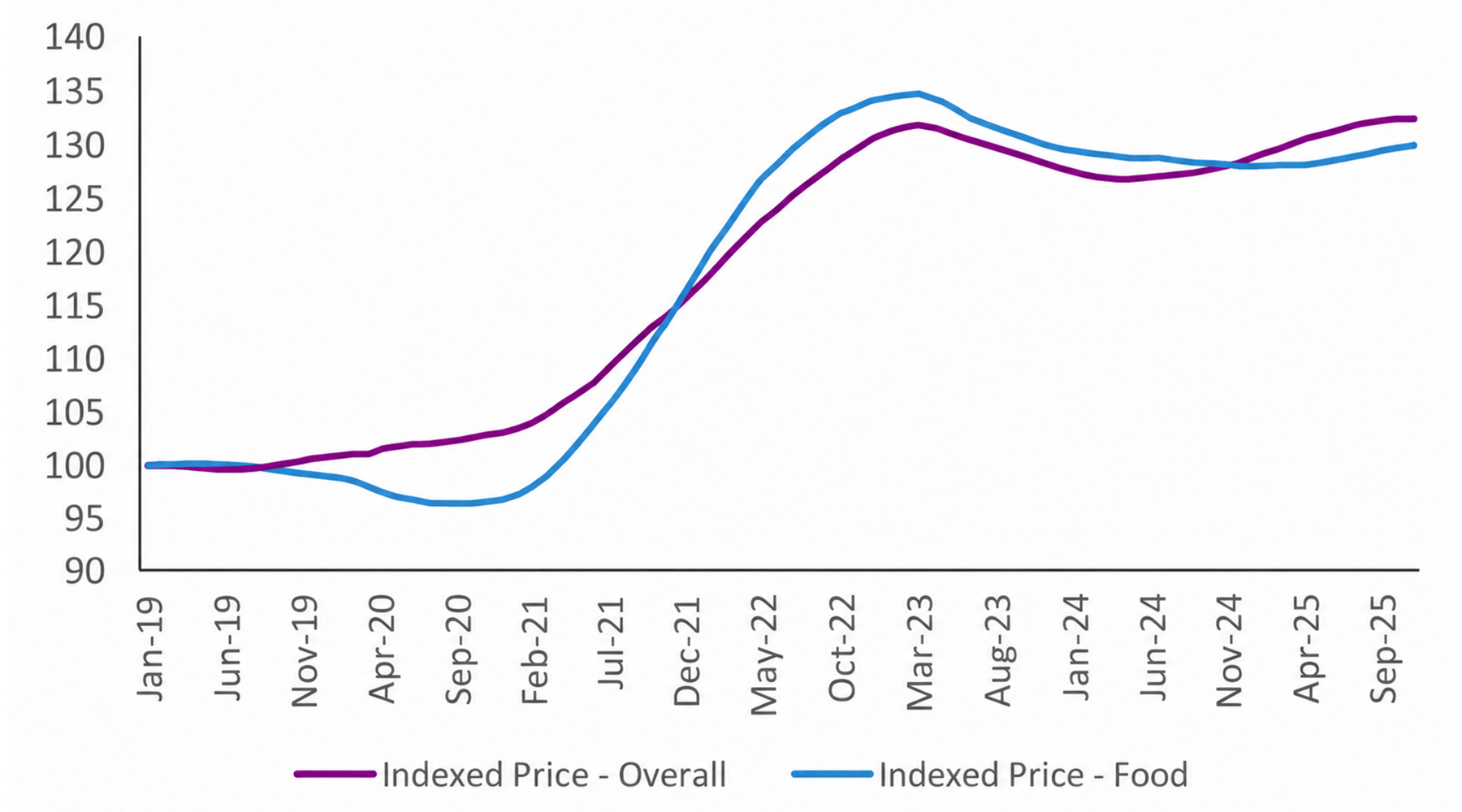
Image: Indexed Price for Processed Goods for Intermediate Demand – % change smoothed over 12 months,
Not Seasonally Adjusted (Jan 2019 = 100)5
- Cost complexity has increased, with layered pricing, rebates, and surcharges obscuring true unit economics and reducing cost transparency.
The current market represents a period of relative equilibrium, creating a timely opportunity to reset vendor economics from a position of balance—before future disruptions in commodities, labor, regulation, or geopolitics again shift leverage back to suppliers. A&M’s proprietary sourcing control tower can signal when there a favorable landscape for COGS reduction initiatives, for example in fresh produce:
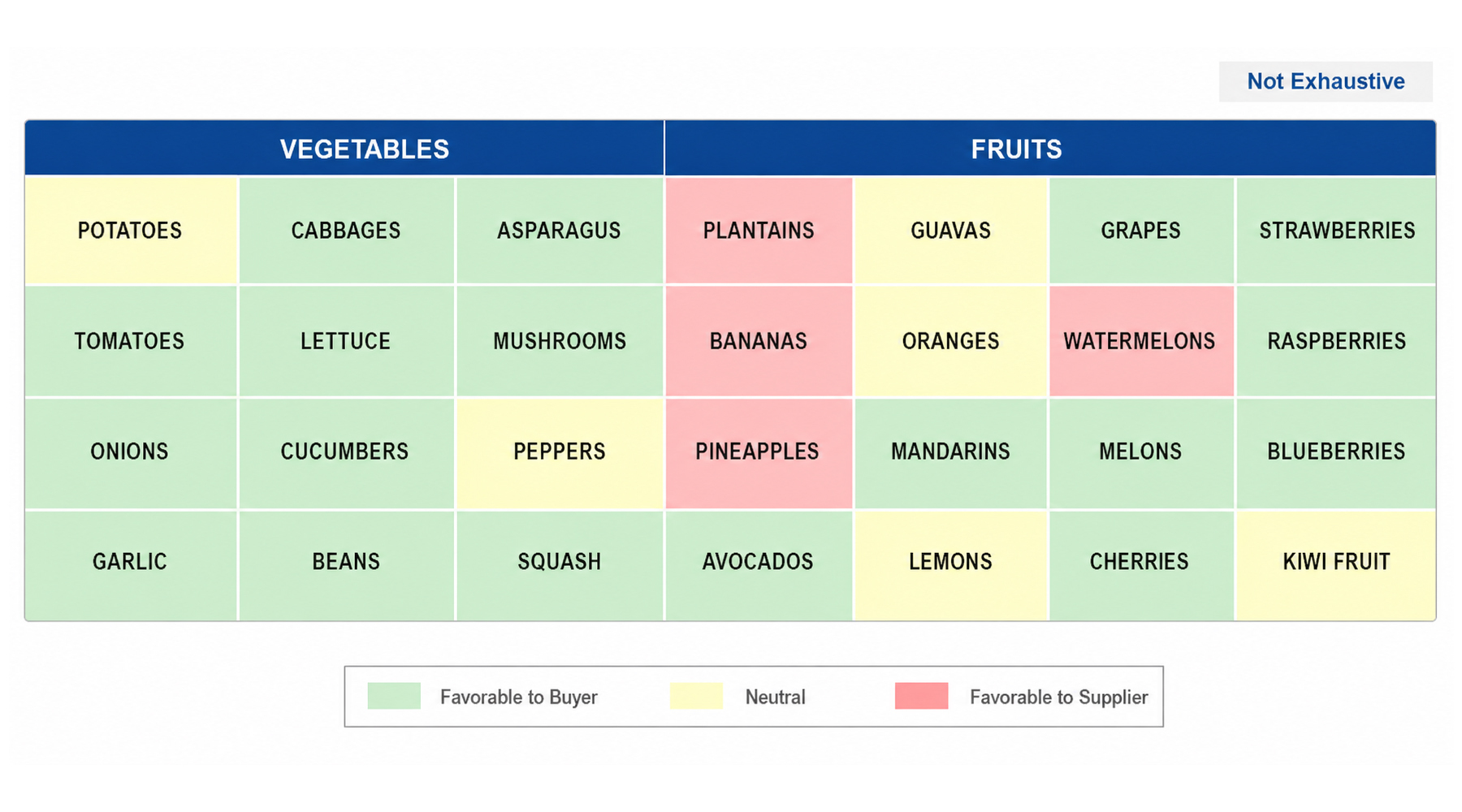
Image: A&M’s market favorability heatmap for fresh produce (Jan 2026)6
Importantly, this is not about timing a narrow window, but about keeping pace with a market that has already moved—and avoiding the compounding disadvantage of structurally higher COGS.
Strategic Levers for Resetting Vendor Economics
Organizations seeking sustainable margin improvement are increasingly activating a set of strategic vendor management levers that address cost structure, supplier economics, and assortment decisions in an integrated manner.
A&M brings a proven, end-to-end SVM methodology for driving sustainable COGS reduction across retailers and distributors
Sustainable COGS improvement demands a structured approach to managing vendor economics. Leading organizations are adopting strategic vendor management frameworks that pair clear principles with disciplined execution to deliver repeatable results. The framework below outlines the key elements of this approach:
- Category-led and customer anchored: Strategic vendor management is driven by category strategy, customer priorities, and assortment economics—not isolated sourcing decisions.
- Performance-based supplier management: strong performers are scaled, weaker performers are actively restructured or exited.
- Enterprise-aligned reinvestment: savings are centrally governed and reinvested, ensuring alignment to enterprise priorities rather than isolated category wins.
- Institutionalized capabilities: establish repeatable ways of working to sustain and expand results over time.
- A wave-based, AI-enhanced execution approach:
- Rapid baseline development: AI-enabled data aggregation, SKU categorization, and contract analytics to establish a single profitability “source of truth”.
- Category analytics and vendor playbooks: AI enhanced market intelligence and automated analytics to generate brand- and SKU-level insights to inform strategy.
- Negotiation execution: Vendor-specific strategies support direct asks and RFPs, with AI-assisted proposal analysis and counter-offer development.
- Contract finalization and tracking: Final terms are aligned, implementation roadmaps defined, and savings tracking established.
- Field execution and governance: Communication and continued change management.
Now Is the Moment to Reset Vendor Economics
COGS reduction is no longer about one-off negotiations or tactical cost takeouts. It requires a disciplined reset of vendor economics—grounded in AI enhanced analytics, aligned to category strategy, and executed consistently across the organization. Companies that act now unlock immediate reinvestment capacity while building the tools, governance, and capabilities needed to sustain results. Those that delay risk embedding structurally higher costs into their P&Ls.
The question is no longer whether to engage suppliers differently, but how quickly and systematically to do so. Organizations that adopt Strategic Vendor Management—driving transparency, accountability, and competitive tension—will be better positioned for growth, reinvestment, and resilience through the next cycle.
The opportunity is real, measurable, and available today. Please reach out to the authors to set up an intro.
1. Consumer Sentiment Survey Fall 2025 – Consumer and Retail Consulting – Alvarez & Marsal
2. Consumer Sentiment Survey Fall 2025 – Consumer and Retail Consulting – Alvarez & Marsal
3. A&M CRG National Brand Basket Analysis, Feb 2026
4. PepsiCo makes iconic snacks more affordable ahead of Super Bowl, PepsiCo Press Release Feb 2026
5. US Bureau of Labor Statistics: PPI for processed goods for intermediate demand,12-month % change, not seasonally adjusted
6. A&M Proprietary Analytics