Mastering Fresh Operations: Tactics for Grocers to Win the Next Decade
Back to All Insights
Fresh: The soul of the grocery store… and the key to the bottom line
For decades, the Fresh departments, produce, meat, bakery, deli, seafood and prepared foods, have defined the identity of the grocery store. As center-store offerings blur and price competition grows, Fresh remains the most tangible expression of a retailer’s identity. Shoppers may forget where they bought a box of cereal, but they remember the strawberries that actually tasted like strawberries or the deli that knew their order by heart.
The importance of Fresh is not just emotional, it’s financial, with Fresh sales reaching an unprecedented 42% of total grocery revenue1. Recent surveys show grocery executives cited Fresh as a top priority as they increasingly recognize that the future will be won or lost in Fresh2. As Fred Meyer President Todd Kammeyer recently noted in Progressive Grocer, “Any project we invest in starts with: How do we improve Fresh?”3
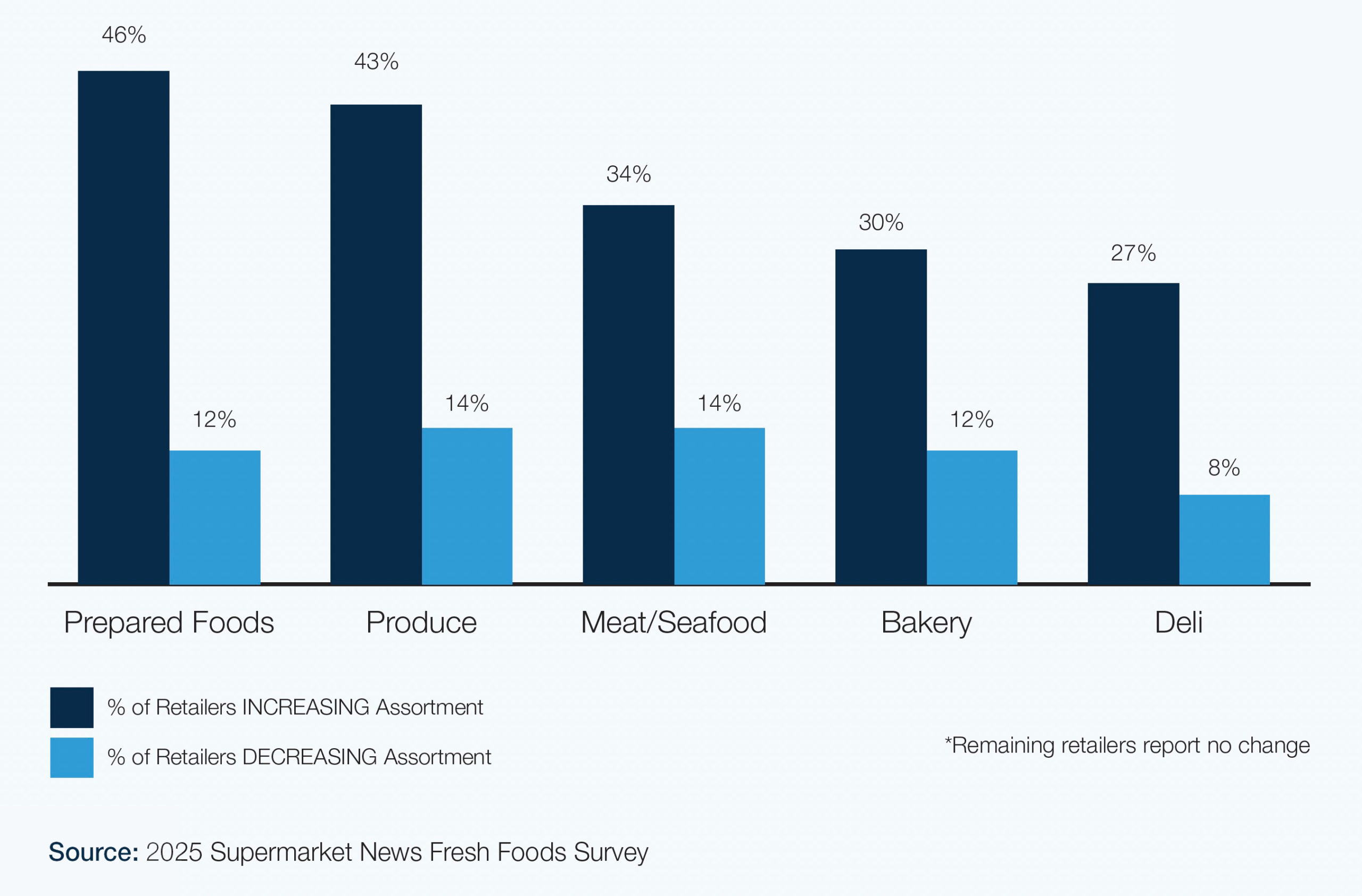
Retailers are expanding assortments in Fresh departments
In the Next 12 months do you plan to change your assortment of items offered across these areas?
An unprecedented opportunity for traditional grocers
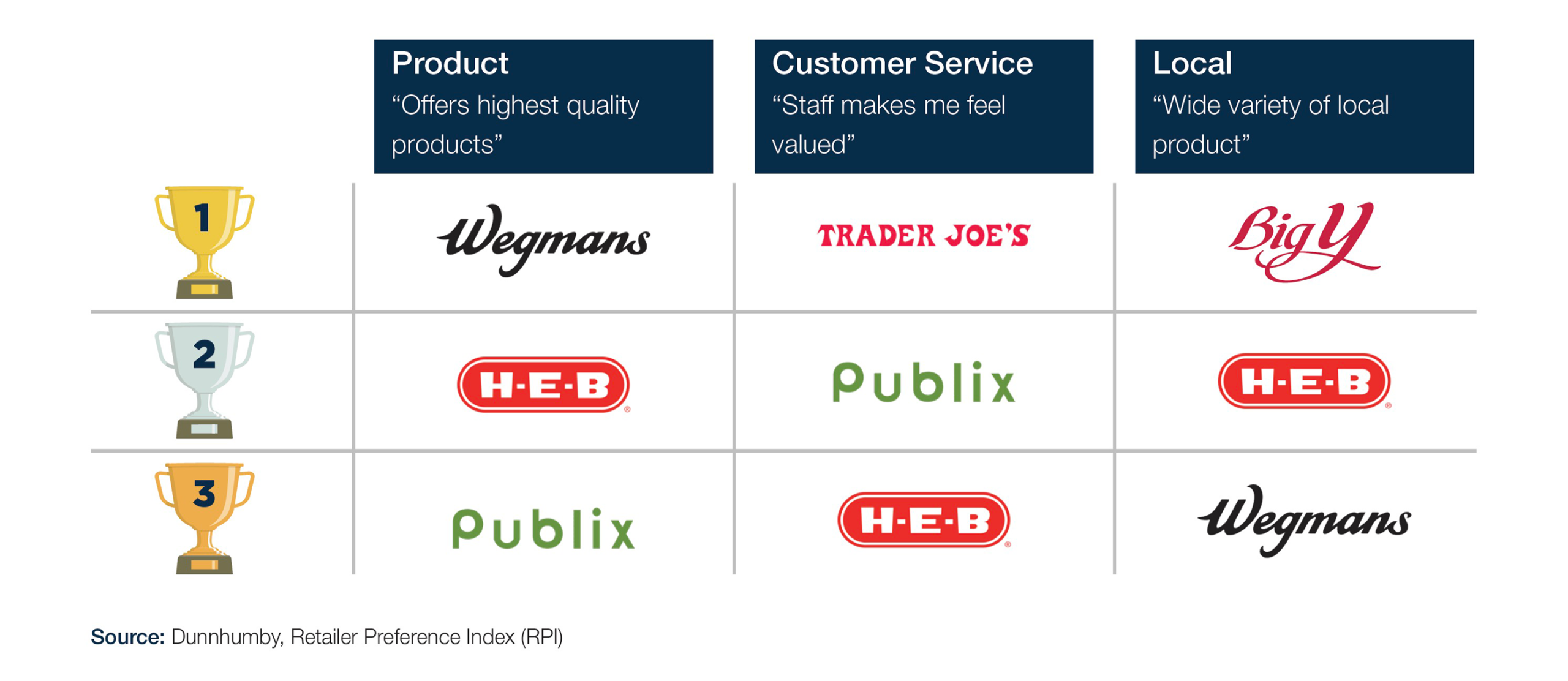
Crucially, Fresh is also where traditional grocers hold their most defensible advantage. Unlike big-box and discount competitors, traditional supermarkets excel in the capabilities that matter most in Fresh: customer service, product quality, and localized assortments. H-E-B’s Texas Proud program4, for example, differentiates through locally grown produce and specialty items that national chains struggle to replicate at scale. Publix similarly wins through service-led Fresh departments, consistently earning top scores in the American Customer Satisfaction Index5.
Consumers rank traditional grocers highest in the areas critical in Fresh
After years of intense competition, traditional grocers are poised to regain momentum by leaning into what others cannot replicate: the power of Fresh to drive loyalty and sustained growth
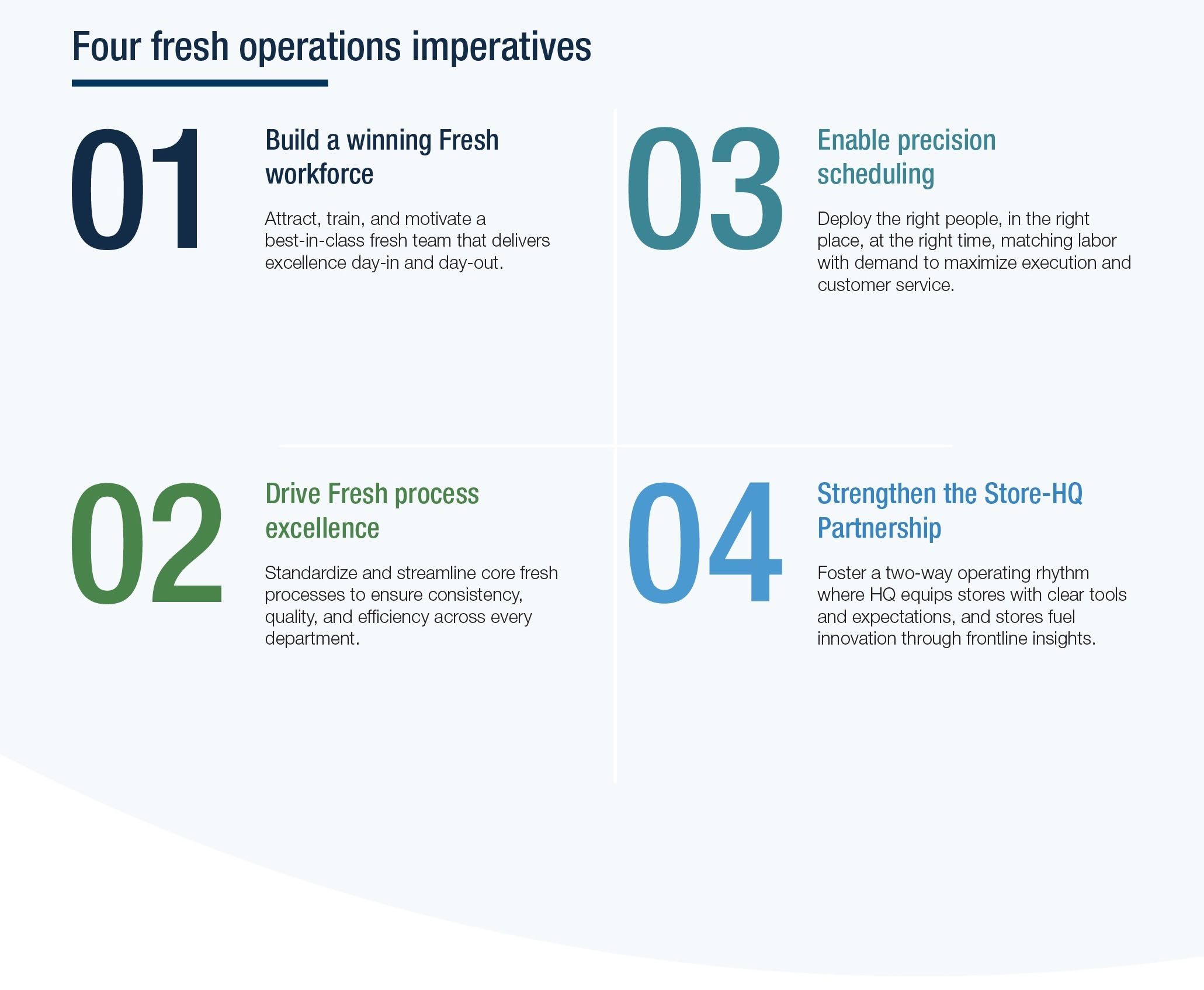
Winning Fresh: Four Fresh operations imperatives
Fresh can be a powerful differentiator but it can just as easily become a grocer’s Achilles’ heel. Unlike center-store categories, Fresh operations are inherently complex, requiring skilled associates to cut, prep, cook, rotate, and merchandise products multiple times a day1, with little margin for error. These labor-intensive processes now collide with rising wage pressure, as labor costs are forecasted to increase by up to 20% over the next five years6, far outpacing food inflation. In this environment, operational efficiency is paramount. Without disciplined execution, Fresh drives waste, margin erosion, and inconsistent shopper experiences. With it, Fresh becomes a durable engine of loyalty and trust.
Winning in Fresh therefore requires more than a compelling strategy, it demands operational excellence at scale. A successful Fresh operations strategy must take a holistic, enterprise-wide approach anchored on four strategic imperatives. In the sections that follow, we outline those imperatives and the practical tactics grocers can deploy today to execute Fresh efficiently and consistently, store by store, day by day.
A&M Consumer & Retail Group has unique expertise to support grocery leaders on the journey to Fresh success
Fresh trends represent a historic opportunity for traditional grocers to unlock sustained differentiation in an increasingly competitive industry. Yet the operational intensity that makes Fresh so powerful also makes it vulnerable. Rising labor costs and margin pressure5 will separate the retailers who merely survive from those who win on Fresh. Executives who act now can turn this challenge into an advantage, redesigning store operations to protect their economics and elevate customer experience.
A&M’s Consumer & Retail Group (CRG) brings a unique mix of consultants and seasoned operators who take a hands-on approach to quickly assess, design, and implement Fresh operations strategies. Our teams have led comprehensive Fresh transformation programs for national and regional grocers, delivering measurable improvement in sales, labor productivity, and shrink. With CRG’s battle-tested tools and proven methodologies, we’re best equipped to help retailers capitalize on this moment and write the next chapter in their brand’s success story.
The grocery industry has spent decades perfecting cost discipline in center store. The next era of competition will be decided in Fresh, at the cutting board, the rotisserie and the donut fryer, and we’re here to help you win.
1. Simbe Robotics
2. Supermarket News
3. Progressive Grocer
4. H-E-B
5. American Customer Satisfaction Index
6. Wharton School of the University of Pennsylvania